
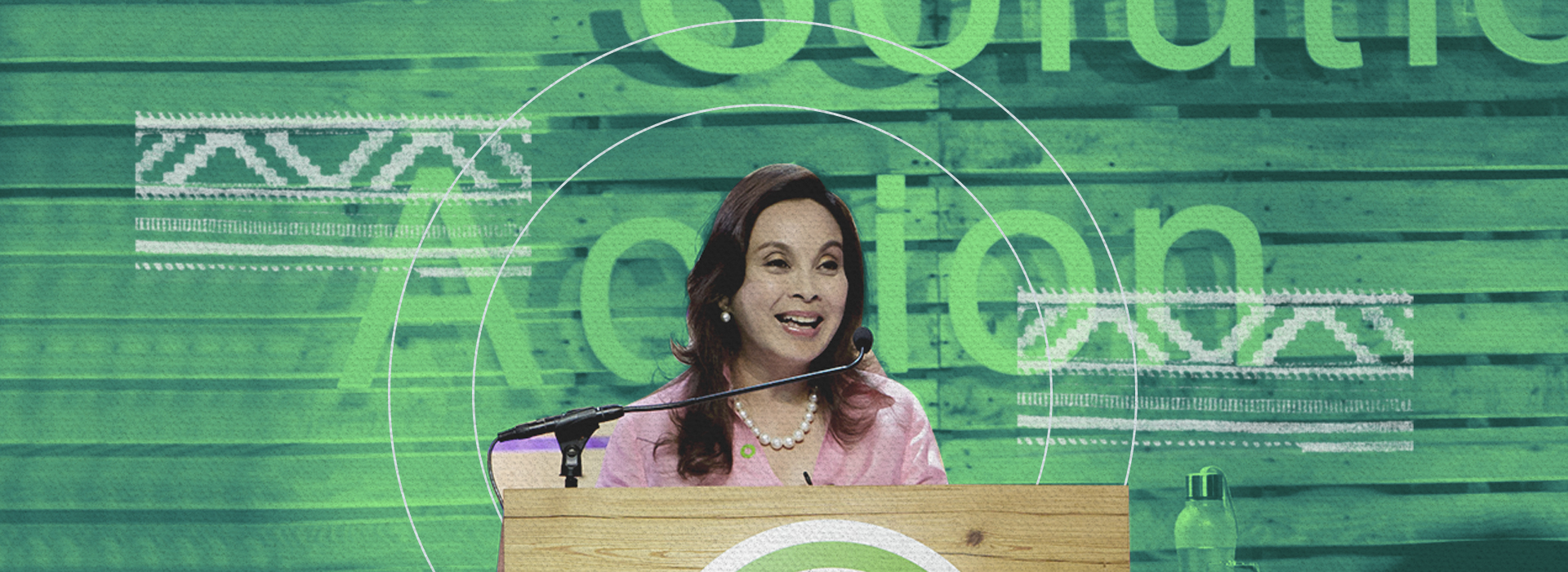
Legarda marks 70 years of Philippines-Japan friendship, recalls decades of shared advocacy
August 5, 2026Senator Loren Legarda joined the commemoration of the 70th anniversary of the normalization of diplomatic relations between the Philippines and Japan, recalling how her encounters with Japanese communities, leaders, and institutions helped shape her work in journalism, legislation, environmental protection, women’s empowerment, sustainable agriculture, and disaster resilience.
Diplomatic relations between the two countries were normalized on 23 July 1956 following the entry into force of the San Francisco Peace Treaty and the Reparations Agreement between Japan and the Republic of the Philippines. Both governments designated 2026 as the Philippines-Japan Friendship Year under the theme, “Weaving the Future Together: Peace, Prosperity, Possibilities.”
“My relationship with Japan began long before I entered the Senate. Through journalism, public service, and international advocacy, I witnessed how the Japanese people translated discipline, cooperation, and respect for their communities into concrete action,” Legarda said.
As a broadcast journalist, Legarda recalled visiting Kitakyushu and featuring women who participated in cleaning polluted rivers and waterways. She said their organized community action strengthened her conviction that environmental protection requires sound laws, responsible governance, and citizens willing to care for their surroundings.
“The women of Kitakyushu showed me what communities can accomplish when people take collective responsibility for the places where they live. Their work stayed with me and later helped inspire my advocacy for ecological solid waste management, including the enactment of Republic Act No. 9003,” she said.
Her television work was also compiled in PEP Talk: The Book, which was translated into Japanese and published in Japan in 1998 under the title Philippine Inside Report.
In the Senate, Legarda participated in the consideration of the Japan-Philippines Economic Partnership Agreement, which received Senate concurrence in 2008.
As Chair of the Senate Committee on Foreign Relations, she also pushed for the Senate’s concurrence in the Philippines-Japan Agreement on Technical Cooperation in 2011. The agreement provided a framework for training programs, technical expertise, equipment and materials, development studies, and knowledge-sharing between the two governments.
Her engagements with Japan also advanced the shared causes of women’s empowerment and disaster resilience.
In 2014, Legarda represented the Philippines at the inaugural World Assembly for Women in Tokyo. She delivered the opening statement during a discussion on building a society where women’s self-determination is assured.
In 2015, Legarda delivered the Philippine Statement on behalf of then President Benigno Aquino III at the Third United Nations World Conference on Disaster Risk Reduction in Sendai. She also co-chaired with then Japanese Minister of Internal Affairs and Communications Sanae Takaichi the High-Level Multi-Stakeholder Partnership Dialogue on Mobilizing Women’s Leadership in Disaster Risk Reduction.
Takaichi went on to make history in October 2025 as Japan’s first female Prime Minister. She was again designated Prime Minister in February 2026 and currently leads Japan’s government.
“Who would have imagined that the Minister with whom I worked in Sendai in 2015 would one day become Japan’s first female Prime Minister? I am deeply proud of Prime Minister Sanae Takaichi and inspired to see a woman with whom I share strong commitments to women’s leadership and disaster resilience assume her nation’s highest office. Her journey is proof to every Filipina that competence, conviction, and compassion belong at the highest levels of leadership, and that women can help shape the future of an entire nation,” Legarda said.
Legarda also recalled meeting then Japanese First Lady Akie Abe during the 2015 APEC Economic Leaders’ Meeting in Manila. Their conversation reflected a shared interest in organic agriculture, sustainable rice production, and encouraging younger generations to appreciate farming.
Mrs. Abe gave Legarda rice from the small organic farm she shared with her late husband, then Prime Minister Shinzo Abe. Legarda later recalled that the rice was brought from Japan as a personal pasalubong, together with the couple’s advocacies and plans supporting Japan’s development.
“Mrs. Akie Abe and I found common ground in our love for farming and our belief that agriculture must be sustained across generations. She knew that I also grew food whenever my schedule allowed, so her gift of organic rice from their own farm carried a deeply personal meaning. It represented values that we both supported: respect for farmers, care for the soil, and responsibility for the food we place on our tables,” Legarda said.
Legarda also expressed her appreciation to outgoing Japanese Ambassador to the Philippines Endo Kazuya, whose tenure began in 2024 and coincided with the celebration of the 70th anniversary of diplomatic relations between the two countries.
“As Ambassador Endo concludes his tenure, I thank him for the friendship and goodwill he has extended to the Filipino people. He leaves at a meaningful moment in our shared history, after helping bring our countries closer as we marked 70 years of diplomatic relations. The relationships he strengthened will remain part of the enduring bridge between the Philippines and Japan,” Legarda said.
Legarda said her engagements with Japan gave her the opportunity to meet and work with Japanese women whose contributions emerged from very different places, from the waterways of Kitakyushu and on to the highest levels of government.
Legarda emphasized that the anniversary honors generations of Filipinos and Japanese who rebuilt relations after the war through reconciliation, cooperation, cultural exchange, economic partnership, and sustained people-to-people ties.
“Seventy years of diplomatic relations carry the stories of Filipinos and Japanese who chose reconciliation, built trust, exchanged knowledge, and worked together for peace and human security. Our responsibility is to carry this friendship forward and ensure that it continues to serve our peoples and the generations that will follow,” she concluded. (30)