
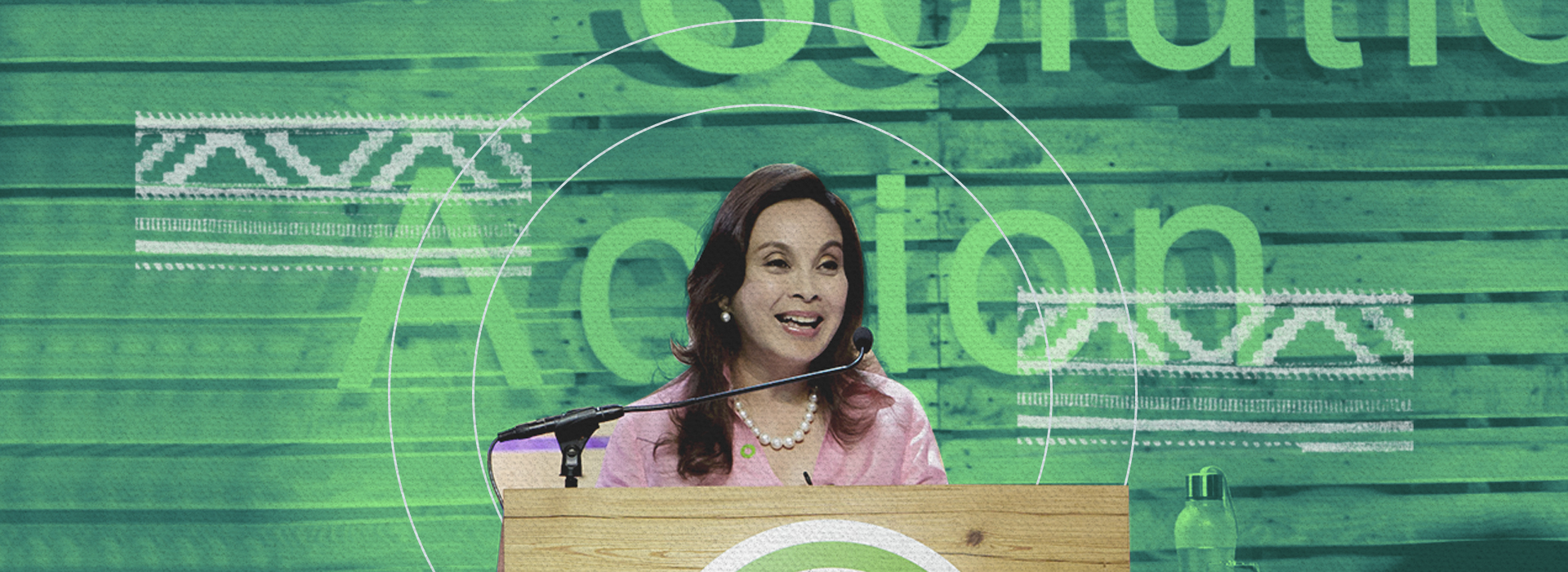
Legarda backs final approval of GIDA Schools Act, strengthening education access in remote areas
March 18, 2026Senator Loren Legarda, principal author and co‑sponsor of Senate Bill No. 1937, or the GIDA Schools Act, which institutionalizes the support for schools in geographically isolated and disadvantaged areas (GIDA), emphasized the urgency of inclusive education as the Senate approved the proposed measure on third and final reading on Monday, March 16.
“Education is a fundamental right and a powerful equalizer. Yet for many Filipino children living in geographically isolated and disadvantaged areas, access to quality education remains constrained by distance, inadequate infrastructure, and limited public services. No child should be denied learning opportunities simply because of geography,” Legarda said.
The Act directs the Department of Education (DepEd) to adopt a three‑kilometer walkable distance or safe transport access standard and to publish a National GIDA Schools Map within one year, updated every three years, with indicators such as limited classrooms, absence of electricity, multigrade classes, and high percentages of Indigenous Peoples (IP) learners.
Inter‑agency collaboration is mandated with the Department of Public Works and Highways (DPWH) for access roads, the Department of Energy (DOE) and National Electrification Administration (NEA) for electricity, the Department of Information and Communications Technology (DICT) for connectivity, and the National Commission on Indigenous Peoples (NCIP) for compliance with Free Prior and Informed Consent (FPIC). The Department of Environment and Natural Resources (DENR) will ensure compliance with environmental laws.
“By institutionalizing support systems for GIDA schools, this measure advances our commitment to inclusive and equitable education for all Filipinos,” Legarda said.
The Act also integrates Indigenous Knowledge Systems and Practices (IKSP) into the curriculum, requires disaster‑resilient infrastructure, and provides teacher support packages including hardship allowances, housing assistance, and localized recruitment.
The GIDA Schools Act’s passage reflects the Senate’s collective commitment to give children in the most remote areas the chance to learn and thrive. (30)